
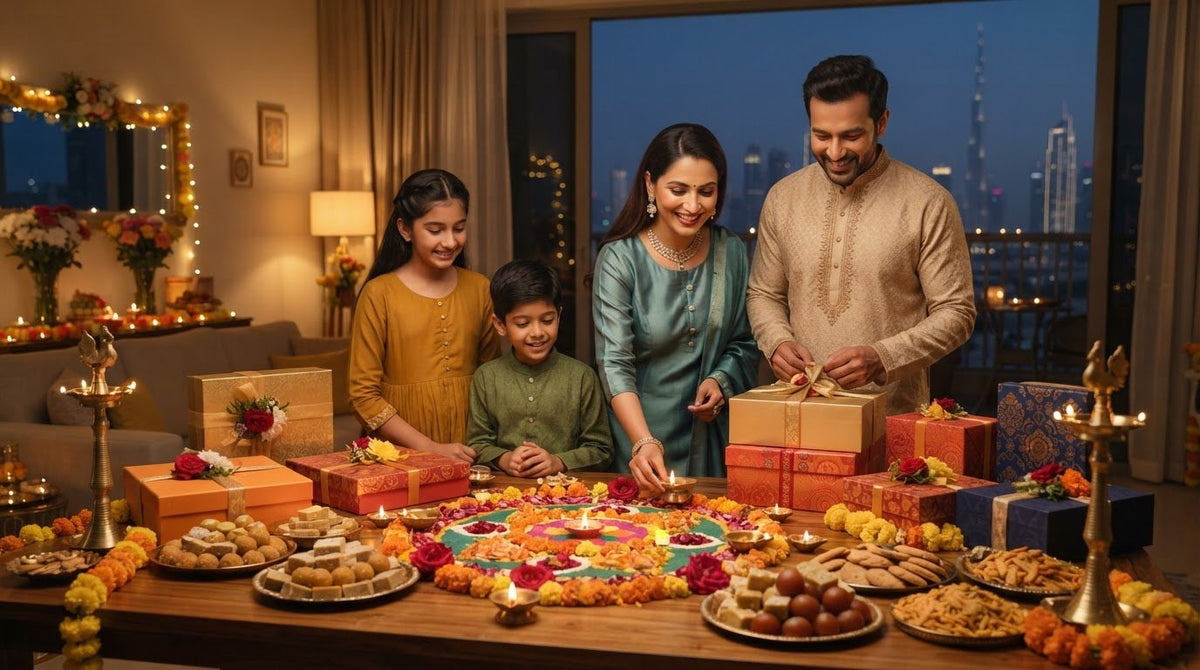
Diwali Special Gifts and Preparations for the Festival
A Diwali special gift can be as simple and warmly received as a box of sweets, biscuits or other treats to share. Pair thoughtful gifts with a calm preparation plan: add festive lights and rangoli, set aside time for a celebratory meal, and organize gifts before visits begin. Diwali celebrations typically last five or six days, depending on the region, so a little planning can make the festivities feel more relaxed.
Choosing gifts that bring people together is part of the joy, but busy days can make the details feel like a lot to manage. This guide offers practical ideas for selecting festive gifts and preparing your home, food and celebration plans. Find inspiration for sweet and savory treats, along with simple ways to make each gathering feel welcoming and warm.
Key Takeaways
- Choose a gift around the recipient, the gathering and any dietary preferences to make it feel considered.
- Compare sweet and savory treats to find a mix that suits sharing, gifting or serving at home.
- Plan decorating, food and gift exchanges ahead of the busy festival period to make hosting feel more manageable.
- Keep regional customs in mind: Diwali traditions and the length of celebrations can vary.
- Dubai’s Festival of Lights celebrations are scheduled for November 2 to 12, 2026, offering a local event to include in your plans.
Diwali gifts
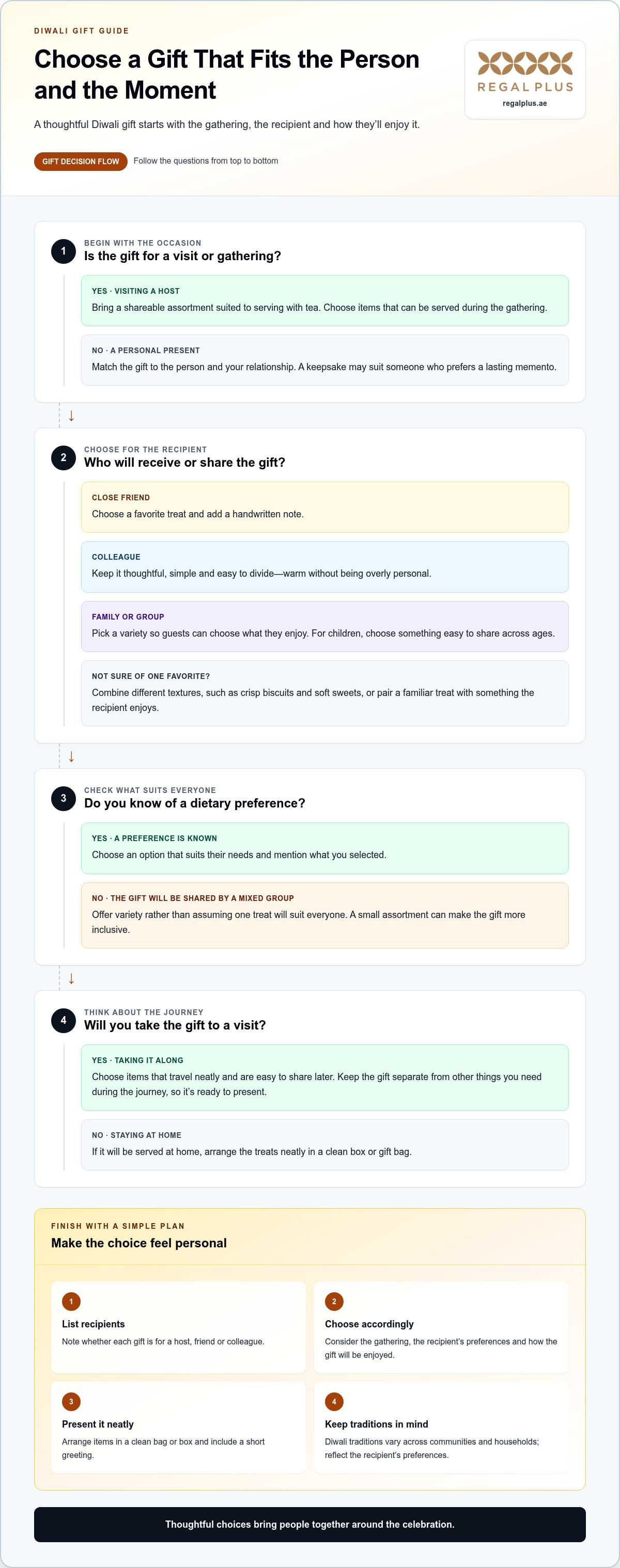
A Diwali special gift feels thoughtful when it suits the person receiving it and the moment you’ll share. Start with the occasion: a host gift for a family visit can differ from a present for a close friend. Diwali traditions include exchanging sweets and gathering with relatives and friends, making shareable treats a natural option. For Diwali in 2028, the date falls on 17 October, which gives gift planners a clear calendar point.
Consider how the recipient will enjoy the gift. A box of sweets can be opened with guests, while a keepsake may suit someone who prefers a lasting memento. For a family with children, choose something easy to share across ages. For a colleague, opt for a neat, uncomplicated gift that feels warm without being overly personal. Matching the gesture to your relationship is more thoughtful than choosing by appearance alone.
Food gifts work especially well when they bring people together around a table. Combine different textures, such as crisp biscuits and soft sweets, or pair a familiar treat with something the recipient enjoys. If you’re visiting a household, choose a gift that can be served during the gathering. For someone to take home, select items that travel neatly and are easy to share later.
- For a host: Bring a shareable assortment suited to serving with tea.
- For a close friend: Choose a favorite treat and add a handwritten note.
- For a colleague: Keep the presentation thoughtful, simple and easy to divide.
- For a family: Pick a variety so guests can choose what they enjoy.
Consider dietary preferences, especially if your gift will be shared by a group. If you know someone avoids a particular ingredient, choose an option that suits their needs and mention what you’ve selected. For a mixed gathering, offer variety rather than assuming one treat will suit everyone. A small assortment can feel more inclusive while staying easy to enjoy.
Presentation adds a thoughtful touch without elaborate packaging. Use a clean gift bag or box, arrange the items neatly, and include a short greeting. A note can make even a familiar choice feel personal. If you’re taking the gift to a Diwali visit, keep it separate from other items you’ll need during the journey so it’s ready to present.
Plan gifts around the gathering, not just the calendar. Make a short list of recipients, note whether each gift is for a host, friend or colleague, then choose accordingly. This helps avoid last-minute mismatches and duplicate choices. Diwali traditions vary across communities and households, so a considerate gift reflects the recipient’s preferences while sharing the warmth of the celebration.
During diwali
Diwali brings together prayer, hospitality and community events, though customs vary between households. In many Hindu traditions, Lakshmi puja takes place on the third day of Diwali. Families may set aside time for worship, then welcome relatives or share a meal. Knowing which observances matter to your household helps shape the day, from preparing a prayer space to arranging visits.
In the UAE, local celebrations can add a public gathering to family traditions. Dubai’s Festival of Lights celebrations are scheduled to run from November 2 to 12, 2026. If you plan to attend, decide which evening suits your household and build travel time into your plans. A simple schedule helps balance the event with home observances, visits and a relaxed meal.
For a home celebration, organize the day around the activities your family values. Prepare the prayer area before guests arrive, set out refreshments, and leave time for visits with relatives. A host can assign small tasks, such as greeting guests or arranging serving dishes. This keeps preparations coordinated without turning a festive gathering into a long checklist.
- Before guests arrive: Clear a place for shoes and set out water or tea.
- For the puja: Arrange the items your household uses in one dedicated area.
- For visitors: Keep a simple order for greetings, refreshments and conversation.
- For children: Give them a small, suitable role, such as arranging flowers.
- For the meal: Serve dishes in stages so guests can settle in comfortably.
Food gives guests an easy way to connect during Diwali. Offer familiar sweets and savory bites, with water alongside tea or other refreshments. If visitors arrive at different times, choose foods that are easy to serve in small portions. A Diwali special menu can suit the gathering without requiring every dish to be prepared or served at once.
Remember that traditions differ across communities when explaining your plans to guests. Diwali is observed by Hindus, Jains, Sikhs and some Buddhists, including Newar Buddhists. The practices and stories associated with the festival are not the same for every family. A thoughtful host welcomes these differences by asking guests which customs they’d like to share, rather than assuming everyone celebrates in the same way.
In Dubai, Sharjah and Ajman, households can shape celebrations around the space and routines they have. A family in an apartment might focus decorations on one welcoming area, while a larger home can set aside separate spaces for prayer and refreshments. Keep walkways clear, place serving dishes within easy reach, and arrange seating to encourage conversation. These practical details help guests feel at ease without changing the meaning of the occasion.
For a smoother visit, prepare a small hosting station with napkins, serving plates and refreshments. Keep the main gathering area clear, and replenish shared dishes as needed. If you’re planning festive food alongside your home observances, explore Diwali treats and festive picks for ideas to share.
Celebrate diwali
A meaningful Diwali celebration can blend familiar customs with the way your household gathers. A common theme in Hindu Diwali celebrations is the victory of good over evil. Let that idea guide the mood, from welcoming visitors to sharing a meal at home. In Dubai, Sharjah and Ajman, family members may bring different regional traditions to one gathering, making conversation part of the celebration.
Light and color shape the festival’s atmosphere. People place clay lamps outside their homes, symbolizing inner light that protects against spiritual darkness. Rangoli patterns, made with colored powders or sand, decorate floors with welcoming designs. For a simple home display, choose a clear area for rangoli and place lamps nearby. A floral motif or repeating geometric pattern gives the design a neat, personal finish.
Diwali stories offer another way to share the festival’s meaning with guests. One well-known account commemorates Lord Rama’s return after a 14-year exile. Families can use the story as a starting point for conversation, especially with children learning why lights and homecoming matter. Other religious communities mark Diwali through their own beliefs and observances, so traditions can differ between households.
The festival calendar also varies by region. Diwali celebrations typically last five or six days, depending on the region. The festival formally begins two days before Diwali night and ends two days afterwards. One household’s schedule may not match another’s, so ask relatives which day they set aside for visits, prayer or a meal, then plan your gathering around their observance.
Food brings customs into the everyday rhythm of a home. Diwali traditions include preparing festive meals, exchanging sweets and gathering with relatives and friends. Decide whether your table will feature a full meal, tea and sweets, or a mix of savory snacks and desserts. A host expecting staggered arrivals can serve small portions, while a family meal can center on shared dishes.
- Set the atmosphere: Choose a place for clay lamps and a separate space for rangoli.
- Share the meaning: Tell guests the Lord Rama homecoming story or another tradition meaningful to your family.
- Plan the gathering: Match the meal and visit time to your household’s observance.
- Welcome different customs: Invite relatives to explain the practices they follow.
Before guests arrive, make a short plan for the gathering. Decide who will greet visitors, where they can sit, and when food will be served. Keep the rangoli area clear of foot traffic, and place refreshments where guests can find them easily. These small choices help the celebration flow without taking attention away from its traditions.
Across the festival, lights, rangoli, food and family visits create a celebration that feels personal and shared. Choose the customs that matter to your household, then make room for relatives to contribute their own. Whether your family observes the festival over five or six days, a thoughtful celebration brings its message into the home.
Set expectations for guests while leaving room for plans to shift around relatives’ observances. Diwali celebrations typically last five or six days, depending on the region. In India, Diwali celebrations unfold over five days. Since households may follow different regional calendars, check with guests before choosing a gathering time. Make clear whether they’re welcome for a meal, a brief visit or time to share stories.
Keep the gathering flexible rather than trying to fit every custom into one plan. Your invitation can say which part of the celebration you’re hosting and invite guests to mention any observance that affects their availability. If relatives follow different practices, give them space to share what feels meaningful without expecting everyone to follow the same routine. A calm, welcoming pace lets the lamps, patterns, stories and food support the gathering rather than turn preparation into a checklist.
Festival diwali
Diwali follows the Hindu lunisolar calendar, so its Gregorian date changes each year. The festival typically falls between October and November. Diwali falls on Sunday, 08 Nov 2026, and on October 29 in 2027. These dates can help households in Dubai, Sharjah and Ajman plan visits, travel, decorations and festive meals around work and school schedules.
Calendar traditions also explain why festival dates may be described differently. In the amanta tradition, Diwali begins on Ashwayuja 27 or Ashwayuja 28 and ends on Kartika 2. In the purnimanta tradition, it begins on Kartika 12 or Kartika 13 and ends on Kartika 17. These are different month-counting systems, not separate festivals. Knowing which tradition your family follows makes it easier to understand its calendar.
Diwali observances form a connected festival period. The festival formally begins two days before Diwali night and ends two days afterwards. Familiar customs include decorating the home, making rangoli, sharing festive meals and sweets, and visiting friends or relatives. Rather than treating every day as the same, households can give each gathering or ritual its own place in the calendar. This makes family plans easier to coordinate.
Religious traditions give the festival different meanings. Diwali is observed by Hindus, Jains, Sikhs and some Buddhists, notably Newar Buddhists. In Jainism, it marks Lord Mahavira’s nirvana, or spiritual awakening, on October 15, 527 B.C. The shared festival name doesn’t mean every community follows the same story or observance. For a mixed gathering, invite relatives to share which customs matter to them.
Some observances extend beyond Diwali night. Bhai Dooj is identified as the final, fifth day of Diwali and focuses on the bond between siblings. This observance can shape family visits and plans in the UAE. If relatives follow different customs, compare the dates they observe before choosing a gathering day, especially when coordinating work schedules, travel across Dubai, Sharjah and Ajman, or a shared family meal.
Diwali’s calendar offers practical clues for preparation. Once you know the date your household follows, work backward from the occasions that need planning. Set aside time for decorating, arrange visits around important observances, and decide which meals suit each gathering. A family hosting on Diwali night, for example, can schedule shopping and home preparations earlier, leaving the day itself open for worship and guests.
- Start with your calendar: Use the tradition your household follows to identify the relevant festival dates.
- Plan around observances: Allow time for visits and rituals that matter to your family.
- Welcome different customs: Invite relatives to share the dates and practices they observe.
- Keep gatherings purposeful: Match each meal or visit to the occasion being marked.
For a festive table, browse Diwali celebration treats alongside your calendar planning. Coordinating food with the occasion can make hosting feel more organized, whether you’re welcoming relatives for a meal or arranging refreshments for visitors in Dubai, Sharjah or Ajman.
Diwali’s reach extends well beyond any one household: over a billion people across diverse cultures join Diwali festivities worldwide. Its observance is also recorded across a long span of historical writing. The Persian traveller and historian Al Biruni documented Diwali in the 11th century, while the Venetian merchant and traveller Niccolò de' Conti chronicled Diwali in the 15th century. These accounts add historical depth to a celebration whose meanings and customs vary among communities.
Preparation often starts well before the festival itself. Diwali rituals and preparations typically begin days or weeks in advance, after Dusshera, which precedes Diwali by about 20 days. That lead time offers households room to organize decorations, meals and visits without crowding everything into the festival period. The Hindu lunisolar calendar means Diwali typically falls between October and November, a seasonal window households can keep in mind while coordinating plans. In Varanasi, Dev Deepavali is celebrated around 15 days after Diwali, extending the season of observance beyond the central festival. Together, advance preparations and later celebrations show how family plans can fit into a broader sequence of occasions.
Regal Plus AE: Gluten-Free Bakery Products
Regal Plus AE offers gluten-free bakery products alongside familiar treats for Diwali gifting and sharing. Choose biscuits, cookies and nankhatai for a tea table, or brownies, cakes and muffins for a sweeter celebration. Khari and toast add crisp, savory options to the spread. These choices help you match treats to the gathering, whether you’re preparing a gift or serving refreshments at home.
For a mixed group, combine different textures and flavors so guests can choose what suits them. Gluten-free bakery products offer another option for guests who prefer gluten-free choices. Pair them with other bakery favorites for a varied festive table, rather than making every item the same.
Explore Regal Plus AE’s bakery selection for Diwali, or visit regalplus.ae.
Make Your Diwali Table Your Own
Choose a final touch that reflects the people gathering around your table. A Diwali special feels personal when you select treats for the occasion, whether you’re welcoming guests, sharing tea or preparing a thoughtful gift. Consider texture, taste and dietary preferences, then leave room for family favorites and new discoveries.
Regal Plus AE offers gluten-free bakery products, biscuits, cookies and nankhatai, as well as brownies, cakes and muffins. These options bring a sweet touch to festive visits and home celebrations. Choose what suits your plans and create a warm, inviting table without overcomplicating it.
Ready to explore treats for your celebration? Browse Regal Plus AE’s Diwali selection and find an idea for your next gathering. May your preparations lead to a bright, generous celebration shared with the people you love.


Leave a comment
This site is protected by hCaptcha and the hCaptcha Privacy Policy and Terms of Service apply.