
Article: Bhakri choices available in the UAE
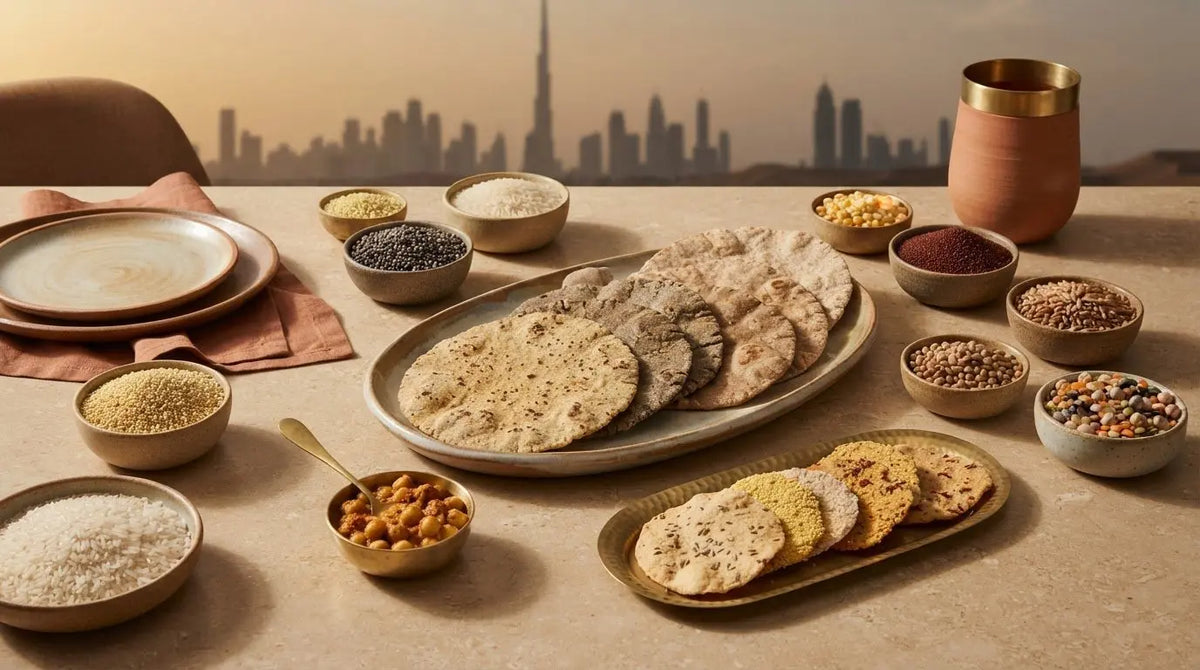
Bhakri choices available in the UAE
Bhakri choices in the UAE go beyond a single millet flatbread. Traditional varieties include jowar, bajra, rice, corn, ragi, wheat and pulses. UAE listings also feature biscuit bhakri in jeera, jowar, bajra and masala varieties.
Choosing a style depends on more than the grain: texture, flavour and how you plan to serve it all matter. This guide to bhakri UAE options introduces different styles, explains how they compare and explores biscuit bhakri varieties available in the country. You’ll also learn what to consider, from a grain’s distinctive character to the convenience of a ready-to-enjoy snack. Whether you’re after familiar flavours or want to try a different grain, you’ll have a clearer way to choose for your table.
Key Takeaways
- Compare jowar, bajra and rice bhakri by grain and regional tradition to find a style that suits your meal.
- Explore biscuit bhakri flavours such as jeera, jowar, bajra and masala among UAE product listings.
- Look beyond the familiar grains: corn, ragi, wheat and pulses each bring a different bhakri variation.
- Distinguish bhakri’s texture from khakhra’s, and consider how you plan to serve or enjoy each.
- Use listed product details and pack information to compare biscuit bhakri options while exploring gluten-free bakery choices.
Bhakri choices: jowar, bajra, or rice
For bhakri in the UAE, the main traditional grain choices include jowar, bajra and rice. Compare their regional roots, texture and preparation to decide which style suits your meal.
Jowar and Bajra Bhakri
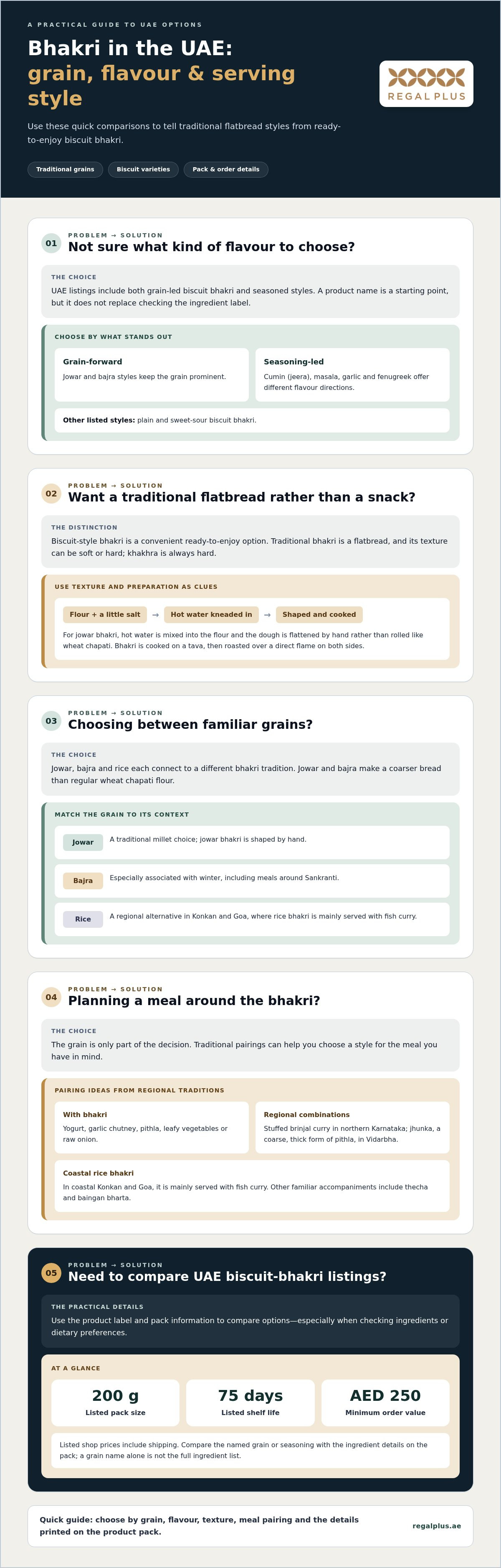
Jowar and bajra are two familiar bhakri grains, and both make a coarser bread than regular wheat chapati flour. That difference gives you a useful starting point: consider whether you want a grain-based flatbread with a more rustic texture. Bajra bhakri is especially associated with winter, including meals around Sankranti, while jowar offers another traditional millet choice.
Preparation matters, too. To make jowar bhakri, mix jowar flour with hot water, then flatten the dough by hand. This hands-on shaping is part of the method, rather than rolling the dough like wheat chapati. Bhakri dough generally combines flour and a little salt, with hot water kneaded in to make a smooth, stiff dough that can be shaped for cooking.
Bhakri can be soft or hard, so the grain alone doesn’t determine its final texture. It is cooked on a tava, with water spread over the upper surface, then roasted over a direct flame on both sides. This preparation helps distinguish bhakri from khakhra, which is always hard.
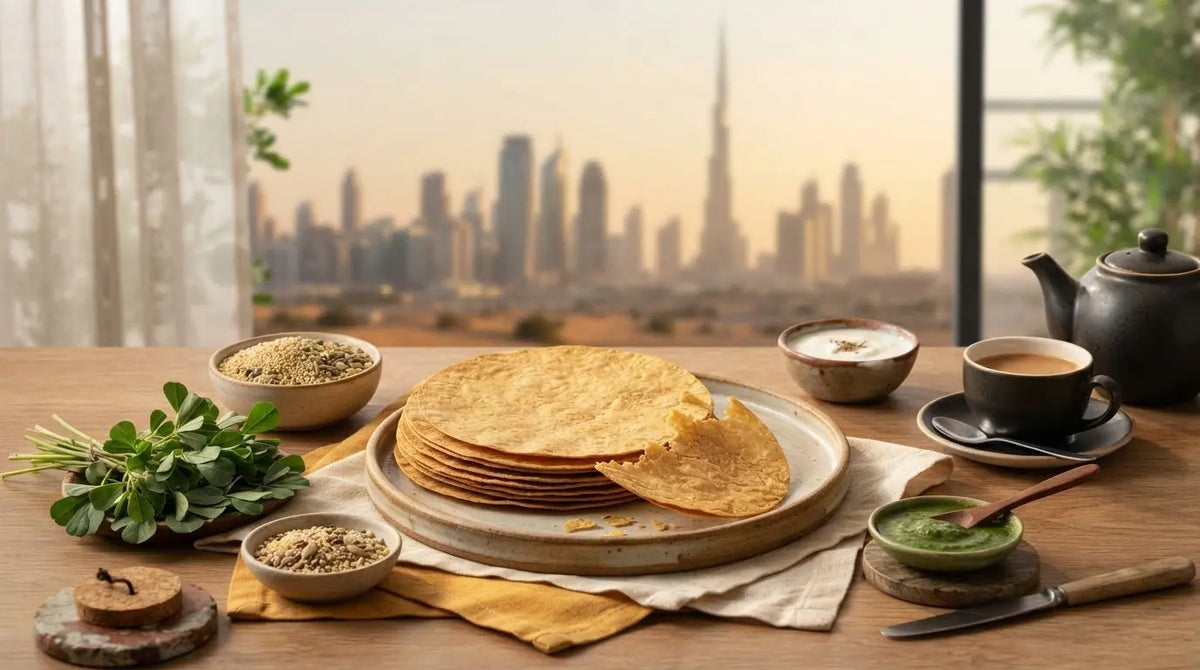
Consider accompaniments as well as texture. Bhakri can be served with yogurt, garlic chutney, pithla, leafy vegetables or raw onion. Regional combinations offer more inspiration: in northern Karnataka, bhakri is served with stuffed brinjal curry, while in Vidarbha it is paired with jhunka, a coarse, thick form of pithla.
Rice Bhakri Options
Rice flour bhakri offers a regional alternative to millet-based versions. In the Konkan and Goa regions of western India, rice flour is used to make bhakri. This makes it a relevant choice for readers seeking a flatbread associated with coastal food traditions, rather than the coarser jowar or bajra styles.
In coastal Konkan and Goa, rice bhakri is mainly served with fish curry. Use this traditional pairing to plan a meal: rice flour connects the bread to a coastal regional table, while the curry provides its accompaniment. The grain and serving context are practical ways to distinguish it from jowar and bajra bhakri.
Whichever grain you choose, consider how you want to serve the bread. Yogurt, thecha, baingan bharta and leafy vegetables are familiar accompaniments. Bhakri also has a practical place in regional food traditions: it was carried to farms at dawn and eaten for breakfast and lunch. These pairings and customs help you narrow down your choice by meal, not just by flour.
Bhakri products available in the UAE
Yes, bhakri can be ordered for delivery in the UAE through the online shop. The minimum order value is AED 250, and listed shop prices include shipping. This helps shoppers plan their basket around the order threshold rather than treating delivery as a separate listed charge.
UAE listings include biscuit-style bhakri in a range of flavours, including cumin, jowar, bajra and masala, alongside plain, fenugreek, garlic and sweet-sour styles. These options offer a convenient way to explore familiar grain flavours and seasoned variations without preparing flatbread dough at home.
Pack details can help narrow down the choice. Listed biscuit bhakri products come in 200 g packs and show a shelf life of 75 days. Before choosing, compare the grain or seasoning named on the pack with the taste you want. A jowar or bajra style keeps the grain prominent, while seasoned options bring additional flavour.
- Choose by grain: Jowar and bajra styles suit shoppers seeking millet-based flavours.
- Choose by seasoning: Cumin, masala, garlic and fenugreek offer different flavour directions.
- Compare pack details: The listed pack size is 200 g, with a 75-day shelf life.
Use the ingredient label to compare products, especially if you’re choosing according to dietary preferences. A grain name alone doesn’t provide the full ingredient list. Check the pack for ingredients and relevant dietary details, then choose a style that fits your household’s needs. This keeps your decision grounded in the specific product, rather than assumptions about a grain.
For a small tasting spread, select contrasting flavour profiles, such as a plain style alongside a seasoned one. For a pantry restock, compare the 200 g pack size with the quantity you expect to use. The displayed shelf life of 75 days can also help with planning, while the AED 250 minimum order value gives you a practical threshold for arranging a UAE delivery.
These biscuit-style options are different from choosing a freshly prepared flatbread, so let texture and convenience guide you. Compare the grain, seasoning, pack size and stated shelf life before adding a selection to your basket. To explore related bhakri and rotla choices, browse the available flatbread range.
These listed prices make it straightforward to compare the named options and decide which grain or seasoning suits your preferences. Consider whether you want the cumin flavour associated with jeera, a jowar or bajra option, or the seasoned masala style. Product names are a useful starting point, but checking the pack details is still important when comparing ingredients and dietary suitability.
If you’re choosing several styles, use the listed prices to plan your selection alongside the order minimum and the rest of your basket. Choose between grain-focused options and seasoned varieties, or compare them with a familiar plain style. Keep the intended use in mind: a contrasting selection lets you sample different flavours, while a preferred style may be more practical for restocking the pantry. Read each product’s details before ordering, so your choice reflects the specific biscuit bhakri rather than assumptions based on its name.
Corn, ragi, rice, wheat and pulse bhakri
These grains and pulses create distinct regional styles, from corn rotlo to kalna bhakri. Compare the main ingredient, local name and traditional meal pairing to choose a variety.
Corn and Ragi Bhakri
Cornmeal bhakri is a winter preparation known by different names across western India. In Gujarati, it is called makai no rotlo; in Marathi, it is known as makyachi bhakri. These names help you recognise the same corn-based tradition across regional menus. When comparing flatbreads, look for cornmeal as the defining ingredient and consider its seasonal connection.
Ragi bhakri is made from red finger millet, distinguishing it from cornmeal versions. The ingredient is the clearest way to tell them apart: cornmeal points to makai no rotlo or makyachi bhakri, while red finger millet identifies ragi bhakri. This distinction helps when choosing by grain rather than relying only on a regional name.
When planning a meal, match the flatbread name to the grain you want to serve. A winter menu can feature cornmeal bhakri, while ragi offers a finger-millet variation. These names describe specific grain choices, not interchangeable labels. Keeping the ingredient and regional term together makes menus easier to understand.
Rice, Wheat, and Pulse Bhakri
Rice flour bhakri is part of the food traditions of coastal Konkan and Goa, where it is mainly served with fish curry. This pairing gives the rice version a clear place in a meal: choose it when you want a flatbread associated with coastal cuisine, and plan the curry as its traditional accompaniment.
Wheat bhakri differs from wheat roti in size and thickness. Wheat bhakri may differ from wheat roti in its size and thickness. These features help distinguish it from thinner wheat roti. The grain alone doesn’t tell the whole story; shape, thickness and preparation also matter.
Pulse bhakri brings lentils into the mix. It can be made with urad dal or a blend of urad and jowar flours. Also called kalna bhakri, this variety’s name can signal a pulse-based preparation. When comparing options, check whether the description specifies urad alone or the urad-and-jowar blend.
These examples show how one category can include several distinct choices. Cornmeal connects to winter and regional names; ragi identifies red finger millet; rice flour links to coastal Konkan and Goa. Wheat stands apart through its thicker form, while kalna bhakri uses urad dal. Consider the grain and preparation together when choosing a style for your table.
Millet and other grain varieties
Bhakri traditions span Maharashtra, Gujarat, Rajasthan and Karnataka. Grain names can point to different regional styles, so compare the named ingredient and its culinary context. Bajra and ragi are two millet choices, while jowar is another traditional bhakri grain. The names help you identify the grain before considering how the bread fits your meal.
Start with the grain, then use regional names to understand the style. Bajra bhakri is associated with winter, especially around Sankranti. Ragi bhakri is made from red finger millet. These details offer practical clues when reading a menu or comparing descriptions: one identifies a seasonal tradition, while the other names the grain itself.
- Bajra: A millet choice with a winter association, particularly near Sankranti.
- Ragi: A bhakri made from red finger millet.
- Jowar: Another grain used for traditional bhakri.
Regional context adds meaning to grain names. Maharashtra, Gujarat, Rajasthan and Karnataka all include bhakri in their cuisines, but names can reflect local usage. For example, bajra’s winter association gives it a seasonal place around Sankranti. Ragi’s connection to red finger millet provides a clear ingredient-based distinction when choosing between styles.
When planning a meal, consider the role you want the flatbread to play. If you’re planning a winter or Sankranti menu, bajra has a fitting seasonal connection. If you want to choose by a specific grain, ragi points directly to red finger millet. This approach grounds the choice in tradition and ingredients, rather than treating every bhakri as identical.
Names can also make a menu easier to follow. When planning a spread, write the grain beside the dish, for example, “bajra bhakri” or “ragi bhakri.” This simple step separates the seasonal cue from the ingredient cue. It also helps guests choose between a millet associated with winter and one made from red finger millet.
Jowar belongs in the same comparison, though its role differs from the specific clues attached to bajra and ragi. Use the name to identify a separate grain option, then compare it with other styles for your meal. The shared word “bhakri” describes the broad flatbread tradition, while jowar, bajra or ragi identifies the grain in that version.
Across Maharashtra, Gujarat, Rajasthan and Karnataka, grain choice connects everyday flatbread with regional food culture. Keep the distinctions simple: bajra for its winter and Sankranti association, ragi for red finger millet, and jowar as another traditional grain. These cues make it easier to read descriptions and choose a bhakri style that suits your meal.
How much does bhakri cost in the UAE?
UAE listings show different prices for biscuit bhakri varieties. Plain Biscuit Bhakri has a separate listing from flavoured options such as Methi, Garlic and Khatta Meetha. Compare each product and its displayed price before deciding what to add to your basket. The flavour name alone doesn’t tell you whether two products have the same listed price.
Use the product name as your first comparison point. Plain Biscuit Bhakri is one option; Jeera, Jowar, Bajra and Masala Biscuit Bhakri offer others. Methi, Garlic and Khatta Meetha add further flavour profiles. Comparing these names side by side helps you choose according to taste, then review each product’s individual listing.
Pack details also help you compare like with like. The listed biscuit bhakri products are sold in 200 g packs, so the pack size provides a consistent basis for comparing these options. Their listed shelf life is 75 days. Read both details together when planning a pantry purchase: the pack size describes the quantity, while the shelf-life information supports storage planning.
- Compare the named variety: Plain, Methi, Garlic and Khatta Meetha are distinct listings.
- Look at the grain: Jowar and Bajra Biscuit Bhakri name their grain choices.
- Review pack details: Listed products come in 200 g packs and show a 75-day shelf life.
- Account for delivery: Prices in the UAE shop include shipping.
Shipping affects how you read the basket total. Prices in the UAE shop include shipping, so the listed item price already includes that component. Compare product listings directly rather than adding a separate shipping estimate to each one. The overall basket total still depends on the varieties and quantities you select.
For a straightforward comparison, shortlist the flavours you want, then review their individual listings and pack details. If your household prefers a plain option, compare it with seasoned varieties such as Jeera or Masala. For a grain-led choice, compare Jowar and Bajra. This keeps the decision focused on product preference and the displayed listing, rather than assuming every flavour has the same price.
Before completing an order, check the selected product names and quantities in your basket. This helps prevent mixing up similar listings, such as Plain and Khatta Meetha, or Jowar and Bajra. Since the UAE shop includes shipping in listed prices, the basket provides a practical view of the selected products together. Browse the biscuit bhakri listings to compare the available varieties.
Treat that as the displayed price for this specific option, not as a guide to the cost of every variety. If you’re considering another flavour, open its own listing and compare the amount shown before adding it to your basket.
This approach grounds your decision in the available product details: the selected variety, its pack and the price shown for that listing. Before completing your purchase, check that the basket contains the intended Plain Biscuit Bhakri and quantity, then review the total alongside any other selected varieties. This avoids assumptions about price differences between flavours.
Regal Plus AE: Gluten-Free Bakery Products
Regal Plus AE is a natural next step if you’re exploring bakery choices alongside traditional flatbreads. Its range includes Gluten-Free Bakery Products, Biscuits, Cookies & Nankhatai, Brownies, Cakes & Muffins, and Khari & Toast. These options offer different textures and flavours for everyday snacking or a shared table.
If you’re choosing for specific dietary needs, explore the gluten-free bakery range and review each product’s details. For a broader pantry selection, biscuits, nankhatai, khari and toast bring familiar Indian bakery favourites into the mix.
Visit regalplus.ae to explore Regal Plus AE’s bakery offerings.
Make Your Next Meal a Little More Your Own
Choosing bhakri in the UAE can help you shape a meal around the flavours and textures your household enjoys. Think beyond the flatbread: build a table around a familiar favourite, a new grain to explore, or a snack to share alongside it. Small choices like these connect traditional food with everyday routines.
For more pantry inspiration, Regal Plus AE offers Gluten-Free Bakery Products, Biscuits, Cookies & Nankhatai, and Brownies, Cakes & Muffins. These bakery choices can accompany the flatbread traditions you enjoy, giving you more ways to plan a relaxed snack or welcoming spread.
Ready to explore your options? Contact Regal Plus AE about bhakri and find a choice that feels right for your table. Enjoy making room for comforting flavours and a fresh favourite.
Frequently Asked Questions
Where can I buy bhakri in the UAE?
Regal Plus AE is an online and in-store retailer in the UAE, with ready-to-eat bhakri products for convenient snacking. Its range includes bhakri, khakhra and rotla products, offering a packaged alternative to flour for home cooking. Choose a product format that suits your meal or pantry, and shop online or in store.
What types of bhakri are available in UAE restaurants and shops?
Shop listings include biscuit bhakri in flavours such as plain, jeera, garlic and masala, as well as grain-led jowar and bajra options. Restaurant menus can feature traditional flatbread styles made with grains such as jowar, bajra or rice. For a particular meal, use the product or menu description to distinguish packaged biscuit snacks from softer meal-time flatbreads.
Where can I buy bhakri flour in the UAE?
For home cooking, look for bhakri flour in UAE grocery stores and choose the grain you want, such as jowar, bajra or rice. Check the flour label before buying, since the grain determines the style you can prepare. Regal Plus AE offers ready-to-eat bhakri products, while flour is the ingredient to seek when you plan to make flatbread yourself.

Leave a comment
This site is protected by hCaptcha and the hCaptcha Privacy Policy and Terms of Service apply.